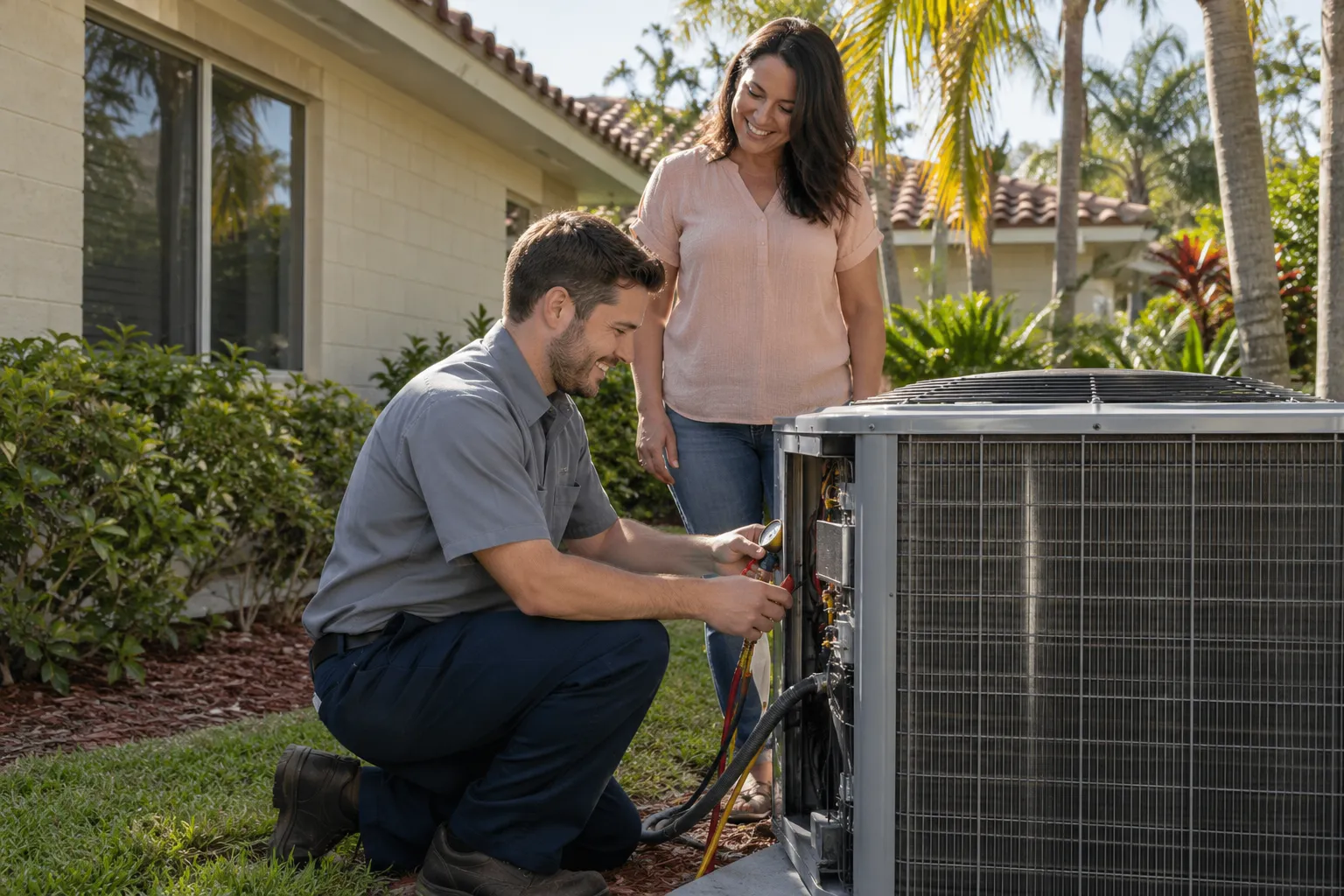
AC Repair When Your Home Stops Cooling
Request an estimate from a local provider
A warm house is stressful, but most AC problems start small. A weak part, a clogged filter, or a blocked drain line can stop the whole system. Think of your AC like a bicycle chain. One slipped link and the wheels stop, even though everything else is fine.
Desperateangeles Heating & Air is a referral service. We do not repair air conditioners. We explain what is likely happening, what to do in the first hour, and why timing matters. Then we connect you with an independent provider in our network who does the work in Tampa and the Tampa area. Emergency AC repair calls are common during long, humid summers. This page walks you through the first checks, the signs to watch for, typical costs, and the questions to ask before you say yes.
Pause, then check: your first ten minutes
A hot house can feel like an emergency. Take a breath first. A few simple checks sometimes explain the problem, and they give a provider useful facts later.
Look at the thermostat
Make sure it is set to cool and the target is below the room temperature. A blank screen often means dead batteries. It is like a TV remote: the TV may be fine, but nothing happens until the signal gets through.
Check the filter and the breaker
A clogged filter blocks airflow. A tripped breaker cuts power to the indoor or outdoor unit. If a breaker has tripped, reset it once. If it trips again, leave it off. That pattern points to an electrical problem, and providers do the work from there.
Glance at the outdoor unit
Is the fan spinning? Is the unit humming but not moving? Are leaves or debris packed around it? Look, but do not open panels or reach inside. Fan blades and electrical parts can hurt you.
Your first hour, step by step
- Turn the system off at the thermostat if you see ice, smell burning, or hear grinding.
- Close blinds on the sunny side of the house.
- Run ceiling fans and open interior doors so air can move.
- Drink water, and check on children, older adults, and pets.
- Write down what you saw and heard. Snap a photo of the thermostat and the outdoor unit.
- Then request a callback to check provider availability, or send the request form.
Why timing changes the outcome
Your AC moves heat out of the house, much like a refrigerator does for food. When one part struggles, other parts work harder to cover for it. Small problem, early is far easier to fix than a big problem after days of strain.
The first few hours
Most breakdowns are still simple here. A dirty filter, a weak capacitor, or a tripped switch is common. The house warms slowly, though a concrete block home holds heat for a long time once it builds.
The first day
If the unit keeps running while iced up, melting ice can overflow the drain pan. In humid weather, indoor moisture also climbs once the cooling stops. You may notice sticky air, damp surfaces, or a musty smell.
After several days
Damp spots can start to grow mold in warm, humid air. A system forced to run with low refrigerant or a failed fan can overheat its compressor, the costliest part. It is like driving with the oil light on. The trip may continue, but the repair bill grows.
Signs your AC needs repair
- Warm or weak air from the vents
- Ice on the copper line or indoor coil
- Water near the indoor unit or a wet ceiling stain
- The system starts and stops in short bursts
- Grinding, squealing, or clicking sounds
- A burning smell or a breaker that keeps tripping
- Rising energy bills with no change in habits
Why humid, stormy weather adds stress
Where storms roll in most afternoons, power flickers are common. A surge can weaken a capacitor or a control board. High humidity also makes an AC work like a sponge that never dries out. Drain lines clog, coils stay wet, and small faults show up fast.
What happens during a repair visit
The provider usually starts with questions about what you noticed. Then they check power, airflow, and the thermostat. They test electrical parts and look at the refrigerant lines, coils, and drain. After that, they explain the cause and give a written quote. You approve before any work starts.
Common AC repairs
- Capacitor or contactor: small electrical parts that start the fan and compressor.
- Fan motor: moves air across the outdoor coil.
- Drain line clearing: removes the clog that causes leaks and shutoffs.
- Refrigerant leak repair: finds the leak, fixes it, then refills the system.
- Thermostat or control board: restores the signal that tells the system what to do.
- Compressor: the heart of the system, and the biggest repair.
Repair or replace?
Ask the provider both questions. A younger system with one failed part is usually a repair. An older system with repeated faults, a costly compressor, or an outdated refrigerant may be worth replacing. A helpful rule: if one repair costs a large share of a new system, compare the two options in writing.
Questions to ask the provider
- What caused the problem, and can you show me?
- Is the quote in writing, with parts and labor listed?
- Is there a warranty on the parts and on the labor?
- Could this happen again soon?
- If I wait a few days, what could get worse?
Getting ready for the visit
Clear a path to the indoor and outdoor units. Keep pets in another room. Have your notes and photos handy. A clear story helps the provider find the cause faster.
Insurance and documentation
Some policies may cover sudden damage, so check your policy. Providers can often help document damage for a claim. Keep your quote and invoice.
Keeping the next breakdown small
Change filters on schedule, keep leaves and plants away from the outdoor unit, and pour a little water into the drain pan area if your provider suggests it. Yearly tune-ups catch weak parts early. Providers do the work, and early attention keeps repairs small.
What's Included
Cooling Diagnosis
A provider checks power, airflow, refrigerant, and electrical parts to find why the air is warm.
Written Quote
You get a clear price in writing before any repair work begins.
Common Part Repairs
Capacitors, fan motors, contactors, and thermostats are often repaired during one visit.
Drain and Leak Fixes
Providers can clear clogged drain lines and track down water or refrigerant leaks in the system.
Typical AC Repair Costs
Prices vary by home, system age, brand, and the part that failed. These are typical U.S. ranges, not quotes. Always ask the provider for a written quote that lists parts and labor before you agree.
| Item | Typical range | Notes |
|---|---|---|
| Diagnostic visit | $75 – $200 | Often applied toward the repair if you proceed |
| Capacitor or contactor | $150 – $450 | Common small electrical repair |
| Condensate drain clearing | $100 – $300 | Helps stop leaks and water shutoffs |
| Fan motor replacement | $400 – $900 | Depends on motor size and type |
| Refrigerant leak repair and refill | $200 – $1,500 | Varies with leak location and refrigerant type |
| Compressor replacement | $1,500 – $3,500 | Compare against replacing the system |
How It Works
Pause and check
Look at the thermostat, filter, breaker, and outdoor unit, then write down what you notice.
Turn off if unsafe
Switch the system off if you see ice, smell burning, or hear grinding.
Reach out
Request a callback to check provider availability or send the request form.
Approve the written quote
Review the price and the plan, then say yes when you are ready.
Why Call Desperateangeles Heating & Air
Plain Answers
We explain what is likely happening in everyday words, so you can talk with a provider without feeling lost.
Independent Providers
Providers in our network are separate local businesses that do the actual repair work.
Calm Guidance
Clear first-hour steps help you stay steady and avoid choices that could make damage worse.
No Obligation
Requesting an estimate does not commit you to hiring anyone, so you can compare.
Other Services
Need ac repair in Tampa?
Tell us what your system is doing. Send a request or email contact@desperateangeles.property, and we will point you to a local provider in our network.
No obligationAC Repair FAQ
Why is my AC running but blowing warm air?
Common causes include a dirty filter, a failed outdoor fan, a weak capacitor, or low refrigerant. Check the filter and thermostat first. If the air stays warm, ask a local provider to diagnose it.
Is it safe to keep running an AC with ice on it?
It is better to turn it off. Ice blocks airflow and can strain the compressor. Switch the fan on to help the ice melt, then ask a provider to find the cause.
How much does AC repair usually cost?
Many repairs fall between about $150 and $1,500, depending on the part and the job. Big repairs like compressors cost more. Always ask for a written quote before approving any work.
Reach a local provider
Tell us what your system is doing. Send a request or email contact@desperateangeles.property, and we will point you to a local provider in our network.
No obligation